
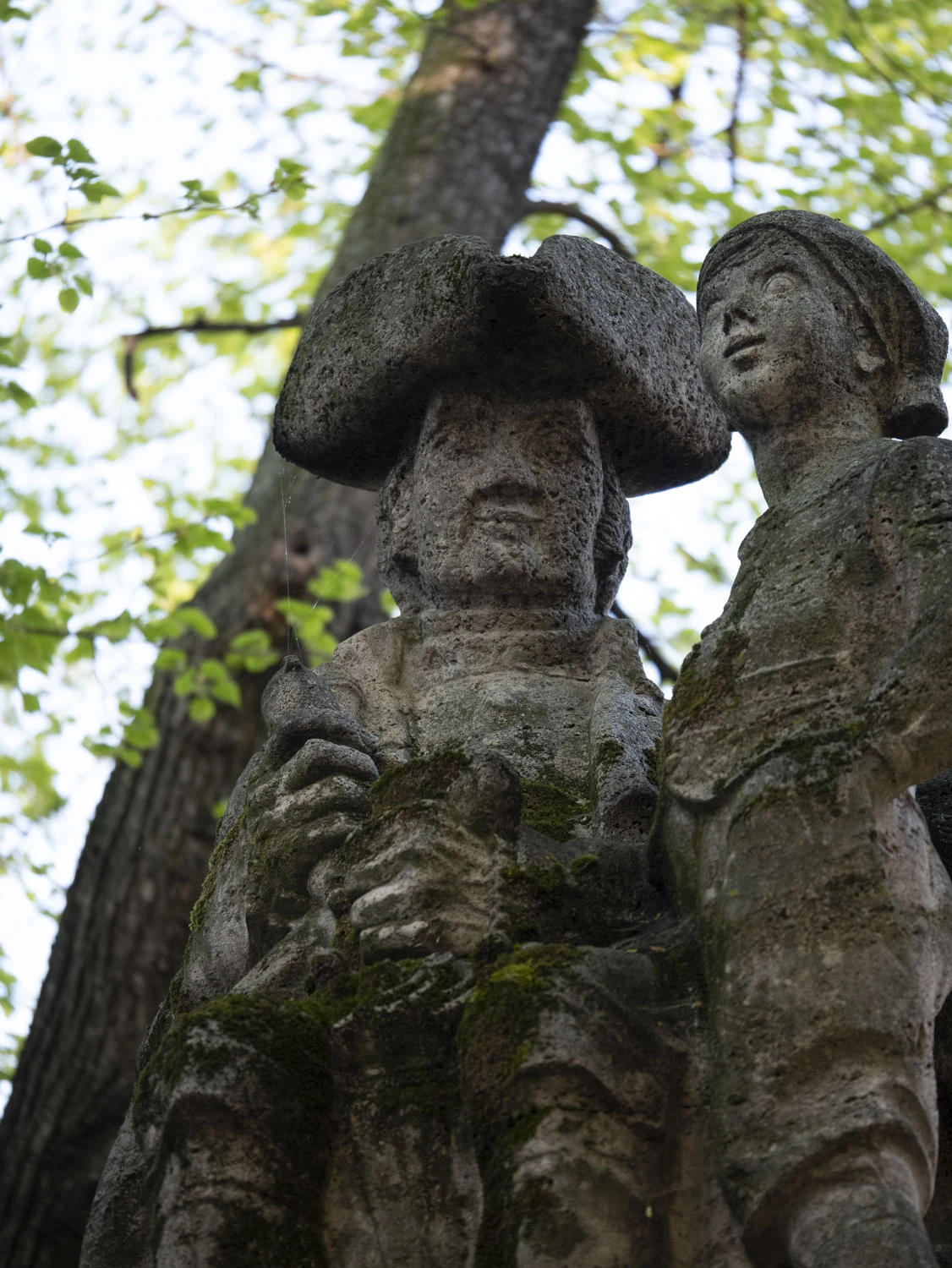
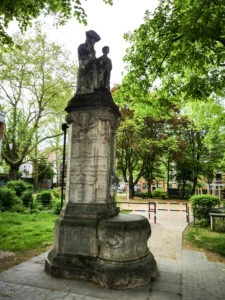
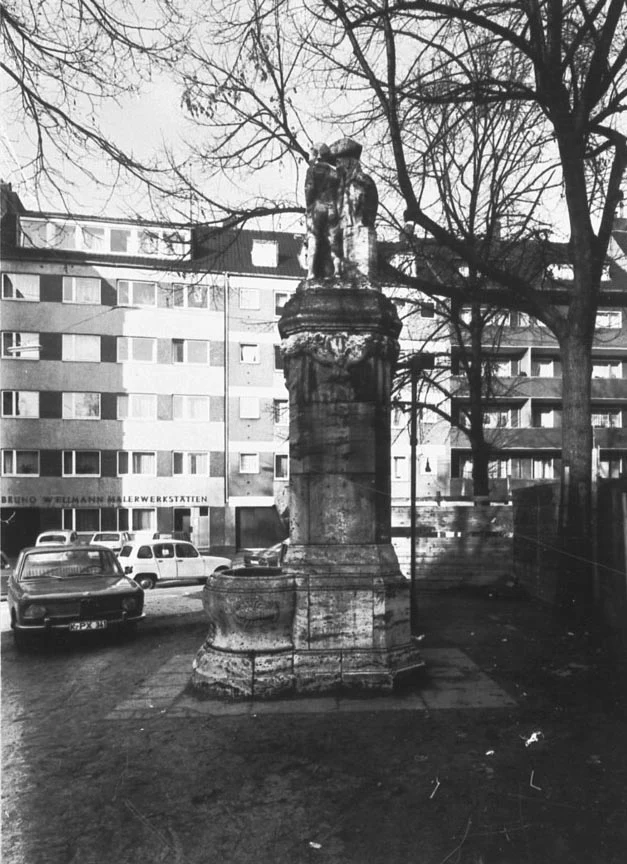
This fountain is an abandoned fountain made of travertine from 1914, designed by Simon Kirschbaum.
The fountain in the street "Im Dau" (Height No. 9) is said to have stood in front of a school destroyed in the war to remember, according to the residents, the "Old Fritz", who introduced the General Land School Regulations for Prussia in 1763.
However, it is a memory of the widow Magdalena Klotz, a granddaughter of the founder of the Hänneschentheater Christoph Winters.
The Hänneschentheater (official name Puppenspiele der Stadt Köln))is a traditional Stock puppet theaters in the old town of Cologne. It is the largest puppet theater in Germany and was founded in 1802.

The scene of the plays is Knollendorf, a fictional village somewhere in front of Cologne. The fictional figures embody the typical characteristics of a cologne, such as Tunes and peeling, chickens and beards and other original personalities. The fountain refers to two of these figures.
Once the Besteva sits in a baroque costume and stands next to him the horny.
Besteva is the good-natured grandfather, rather slipper hero. The Hännesche is a quick-witted, clever and courageous boy with his heart in the right place, sometimes a little too quickly to inspire.
Sources:
https://de.wikipedia.org/wiki/K%C3%B6lner_Brunnen https://de.wikipedia.org/wiki/H%C3%A4nneschen-Theater