English working translation. The German original is available via DE.
The Roman Cologne
The colonia Claudia ara Aprippinensium (also) CCAA freely translated: “Claudic colony and sacrificial site of the Agrippinese”
For the inhabitants of the colony it was always important that the surrounding area was always part of the center, the citizens naturally had land ownership in the entire area. Most of the inhabitants (Agrippinensians did not live in the CCAA but in the countryside, as well as in Neuss, Krefeld Jülich, Zülpich and many other places).
The south of Cologne did not belong to the Roman city centre.
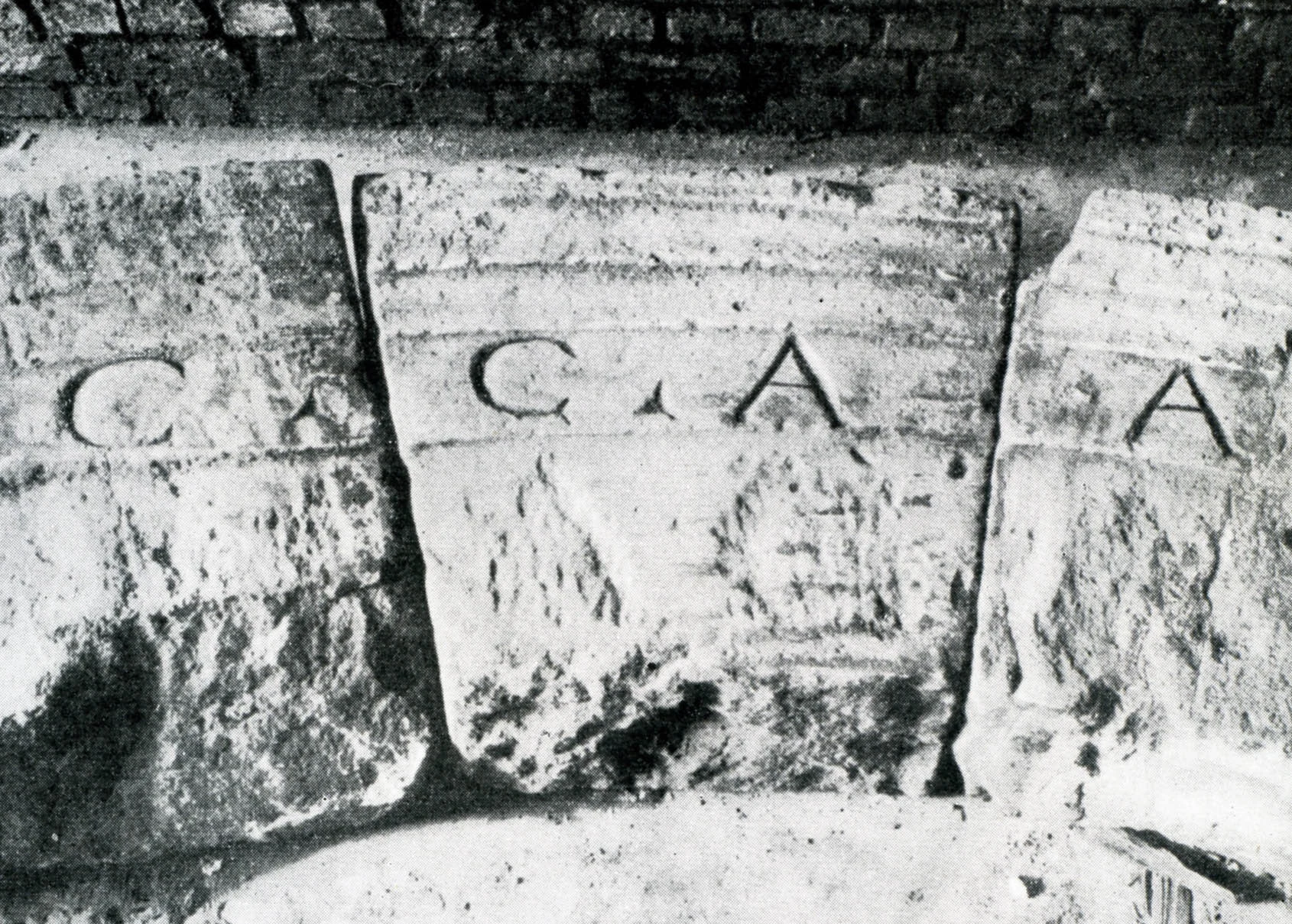
The Severinstraße began at the Roman south gate “Porta Jovis” (about today’s Hohe Pforte) and led to Bonn. As an army and failure road, it was also the largest grave road. This is proven by numerous findings. Remains of burns and burials were found. The most important find was the tomb of Poblicius, which was uncovered in 1965 and is now in the Roman-German Museum.
At the beginning of A Christian community is already forming in Cologne in the 3rd century, but the first testimonies to this are only from the Fourth century. The first bishop whose work has left traces in Cologne is Severinus (Latin: The Strict). Only his death date is handed down, 25 October, two km south of the Roman wall, at the place of the later Abbey of St. Severin was buried.
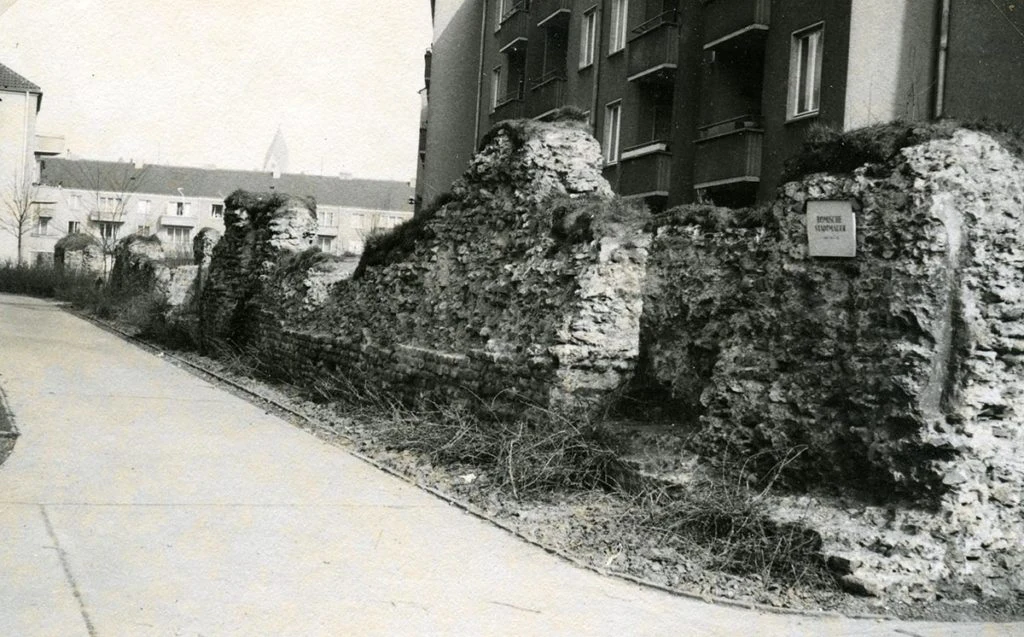
In front of the south gate of the city wall was built around the middle of the 4th century. A cemetery chapel was erected in the middle of a gravefield that extended to Bonn on both sides of the road. Only in the 8th century this church (now several times enlarged) is called Severinskirche.
Photo credit: G. Heuser; Source: Bernd Paeffgen: The excavations in St. Severin in Cologne. 3 volumes. Zabern, Mainz 1997. (Cologne Researches, 5). ISBN 3-8053-1251-2 . Bd. 1, p. 67, FIG. 16 · Public domain (PD-alt-100) · Image source · Reduced for web presentation and saved as WebP. · Image credit
Frankish Cologne
Around the year 445 the Roman predominance in Cologne ends. It is reported that the city (unlike Mainz and Trier) was not destroyed. But many residents of Cologne, especially those who could afford it, fled. The francs use the remaining representative buildings, but do not maintain them. A diverse population emerges: Romans, Germanic, free, slaves, half-free, Christians, pagans.
The tribal federation of the Franks is divided into numerous groups. A partial king known for his cruelties and intrigues is Chlodwig, who came from the Merovingian family.
When Chlodwig comes to Cologne, he denies all participation in intrigue and murders and becomes the sole ruler of all francs.
Image source: WDR. The legacy collection does not identify an individual author or licence. · Image source · Image credit
Possibly Chlodwig was in the church of St. Gereon, at the gates of Cologne, proclaimed King of all Franks. Later he gives the name of the square at the Severinstor.
Visiting a real "old Roman" in the neighborhood
Those who want can visit a real "old Roman" in the district. In the wooden shop Schumacher there is an original tomb with bones.