
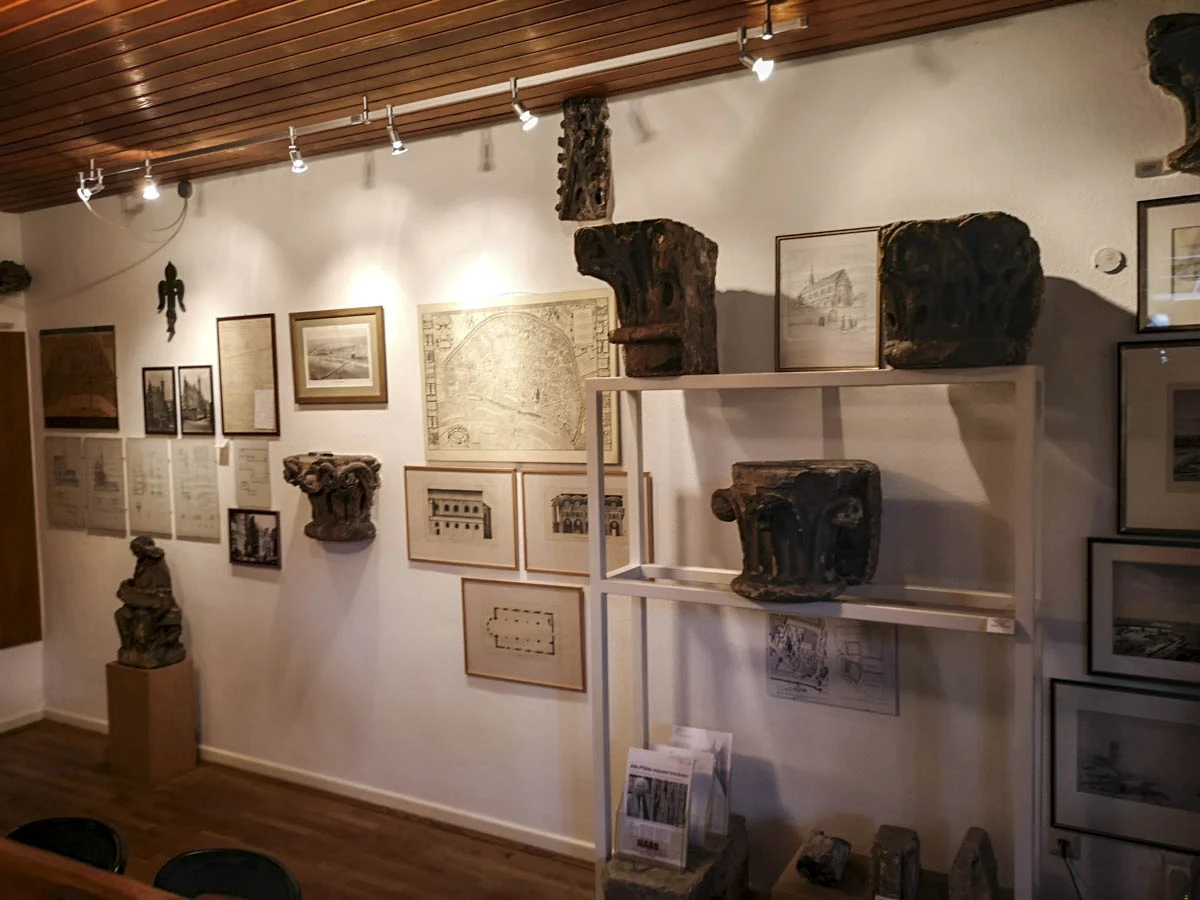
In 1830 the company Theodor Schumacher Söhne was founded. However, it is not only known as the leading wood specialist business, but also offers an insight into 2000 years of history of the Vringsveedel.
The property alone has a turbulent history behind it. In the 13th century, the monastery Sion stood on the property corner Achter- and Landsbergstraße. This was followed by a Beginenkonvent (Beginen are members of a Christian community who do not take religious vows and did not live in Cloister) and the Monastery of the Holy Trinity.
In 1848, the neo-Gothic house was built, which came into the possession of the Schumacher family in 1910.
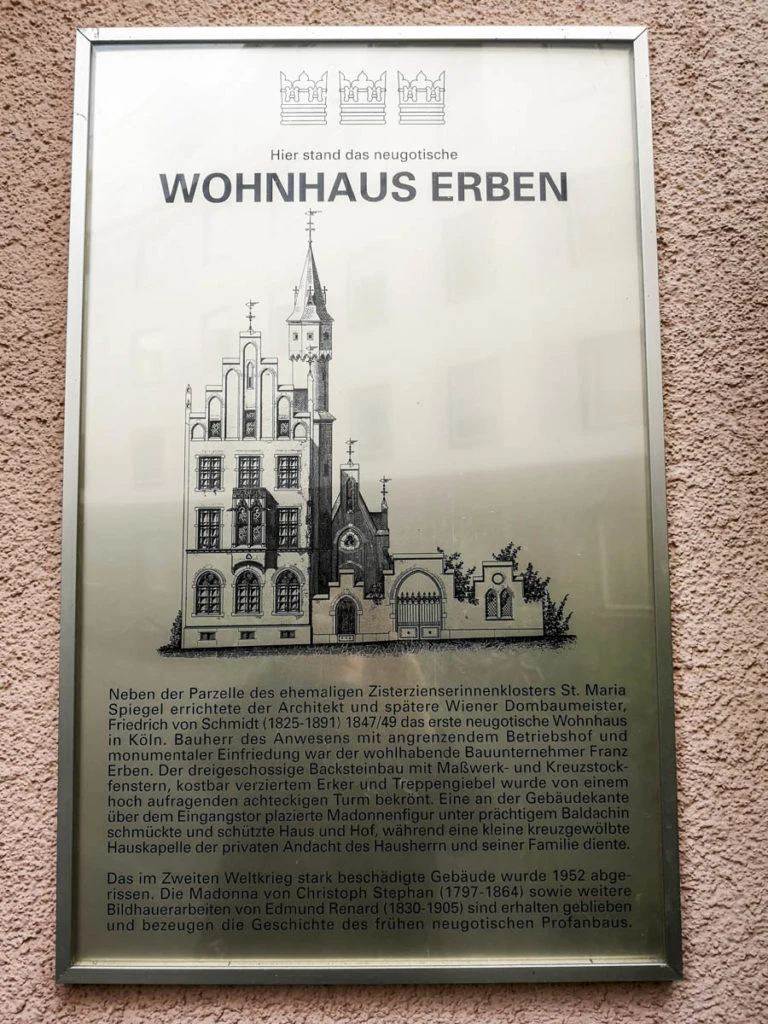
There are still two bay heads, designed by the sculptor Eduard Renard, who also built the Heinzelmännchenbrunnen. Next door was the Volksbadeanstalt, whose rear wall is now integrated into the wooden warehouse. During World War II, both buildings were bombed.
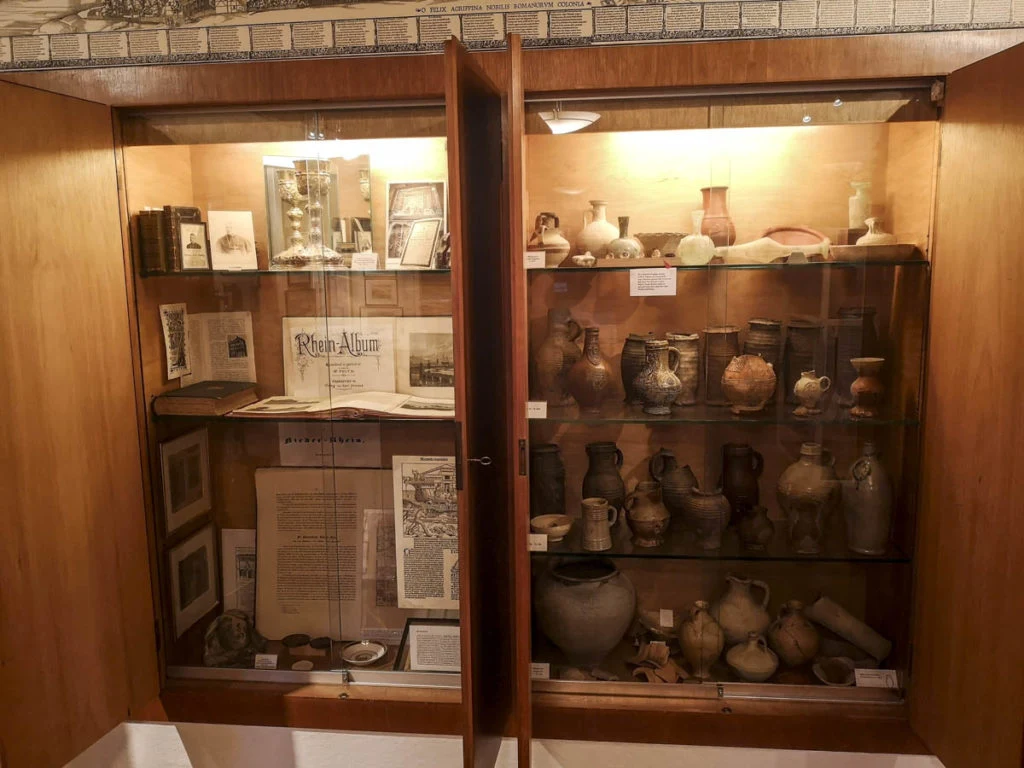
On display are objects from two millennia that not only document the history of the place, but also provide documents on the family history.
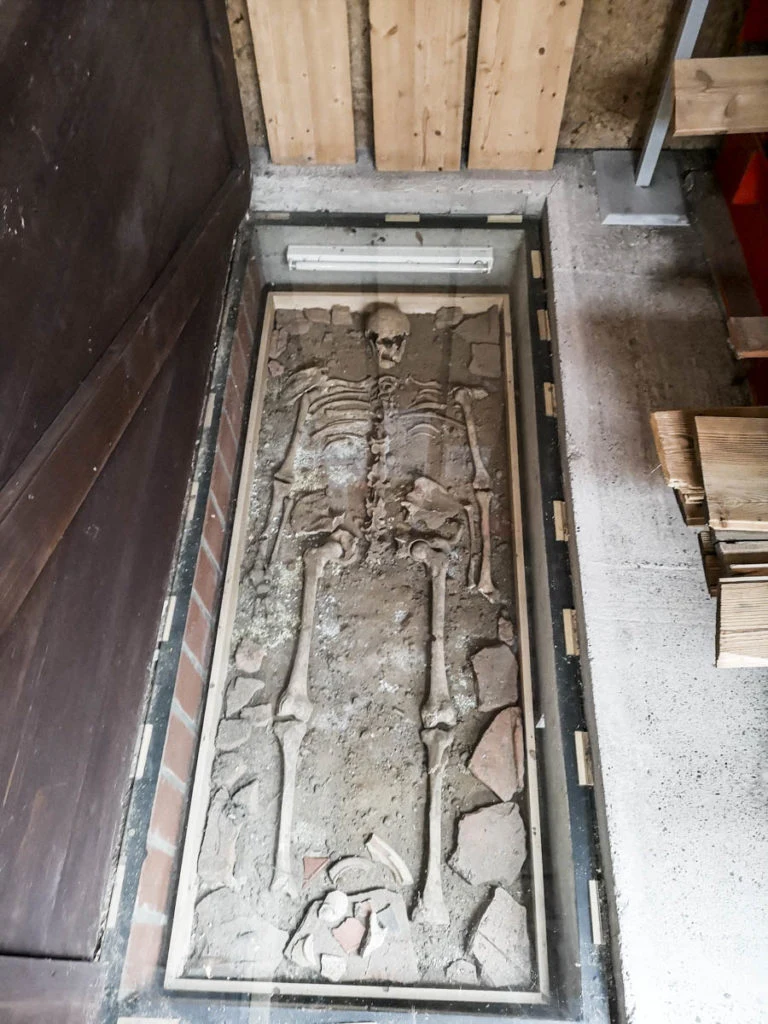
The main attraction of the exhibited objects is certainly a Roman tomb. The skeleton lay in a poor grave in the south city, only covered with a roof of clay bricks. 2,000 years ago, today's Landsbergstraße was located at the gates of the city, which only began at Waidmarkt. Along the Roman north-south axis, today's Severin road, the Romans buried their dead.
Wiljo Schumacher. Avid hobbyist archaeologist was able to combine with this unique private museum his two passions, art history and wood trade.