
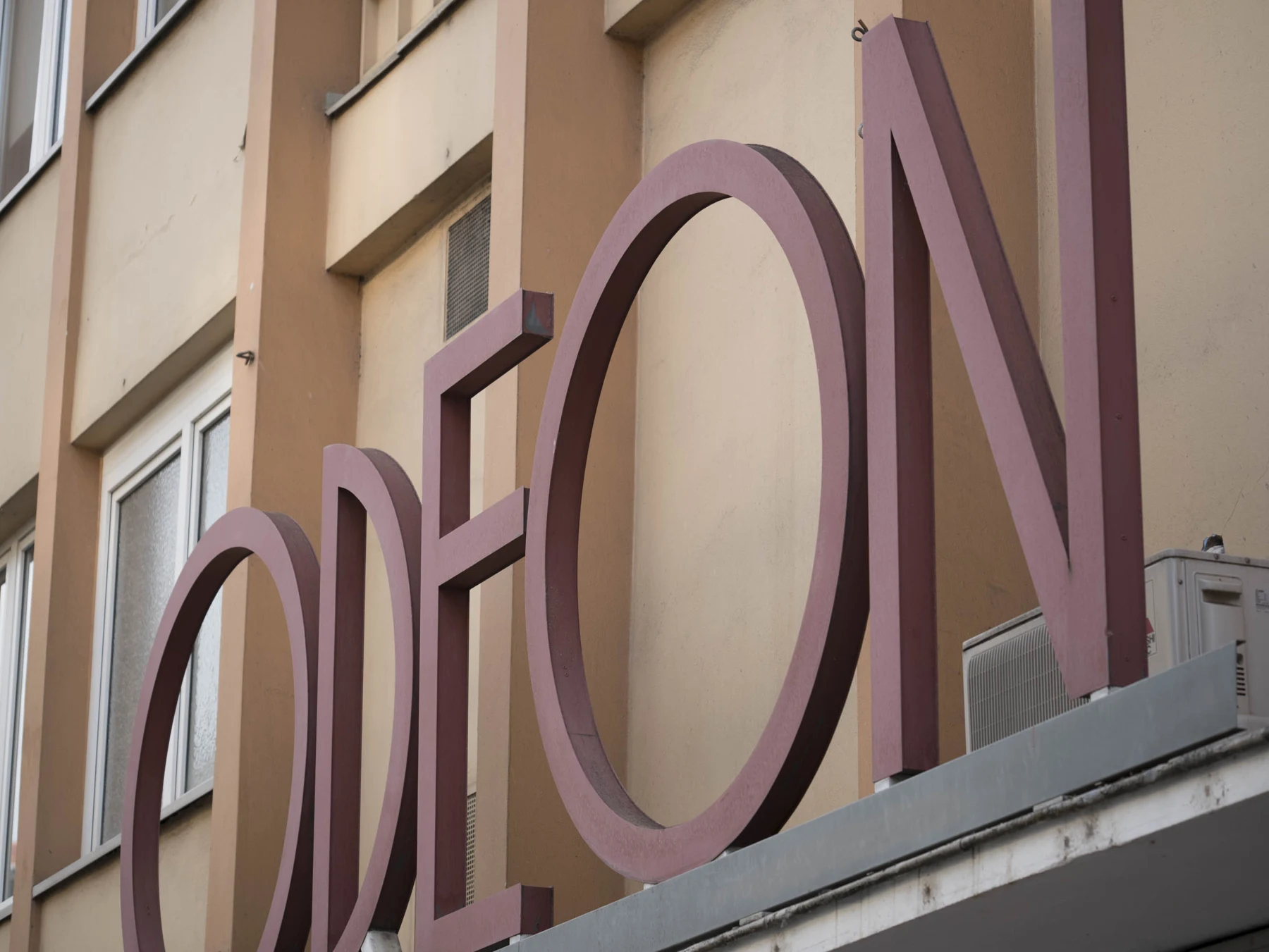
The ODEON-Lichtspieltheater in Kölner Südstadt
The history of today’s ODEON cinema begins in the mid-1950s. The newsreel and feature film cinema in post-war Germany is booming. In 1956, the cinema operating company 'Filmbühne Dr. Sander KG' opened a spacious new cinema building with 700 seats under the name 'RHENANIA' instead of the 'Vrings Opera', which was completely destroyed in the war. Films such as 'Der Hauptmann von Köpenick' with Heinz Rühmann or the 'Trapp family' fill the spacious cinema effortlessly for months.
At the beginning of the 1970s, the great cinematic death of the 1950s film palaces began in Germany. The wide distribution of television makes visitors stay at home. Visitor numbers in the ODEON are also declining dramatically. Accordingly, the operators of the cinema change frequently. It was not until the end of the seventies that a new phase of stability began for ODEON through the transformation of the cinema into a theatre. 'Theater im Vringsveedel' is officially called from 1977 to December 1986, but especially as 'TRUDE HERR-THEATER' named after its operator, it is still in the memory of many Cologneers today.
True Mr
Trude Herr was a Cologne actress, singer and theatre director. She was born in 1927 in Cologne-Lilk and died in 1991 in southern France.
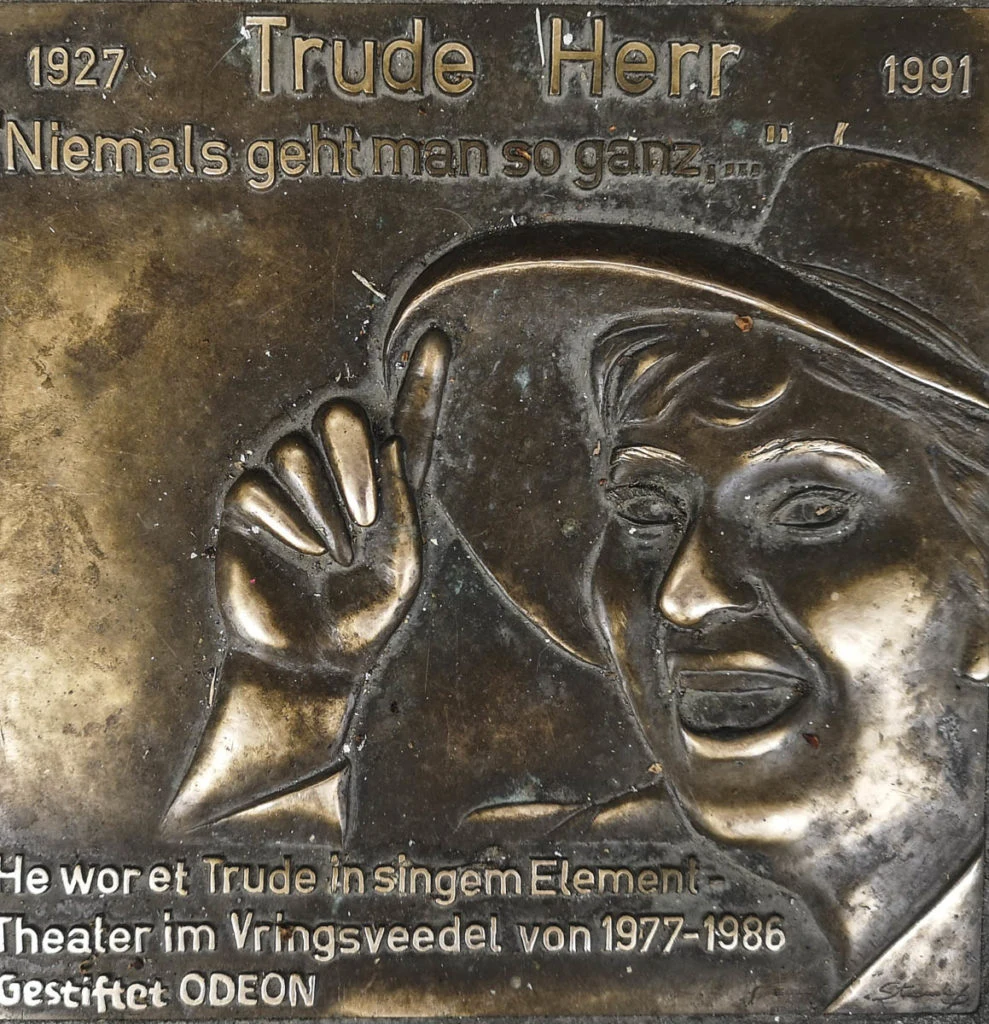
In the 50s of the last century she performed again and again during the Carnival period on various stages as a singer and Bütten orator.
She landed her biggest hit in 1960 with “I don’t want chocolate (I prefer a man)”, which was covered several times by other artists (including a version of Dirk Bach).
In 1977 she opened her Volkstheater “Theater im Vringsveedel” (now ODEON-Lichtspieltheater) on Severinstraße as an alternative to the established Millowitsch Theater.
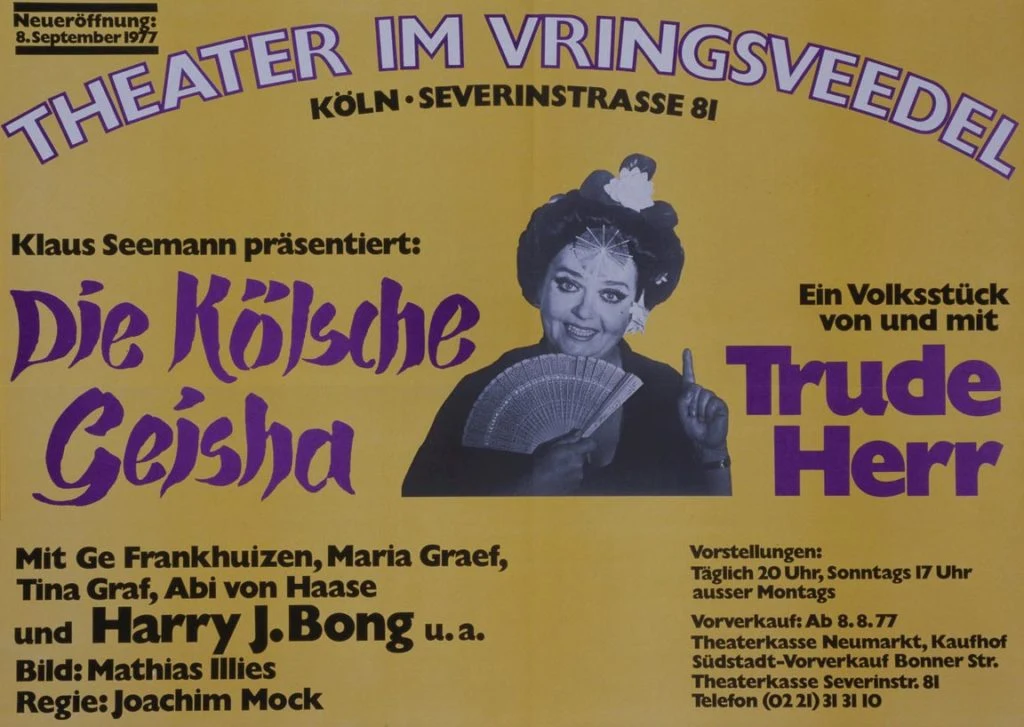
The schedule lasted only from September to the end of December, the rest of the time the theatre was rented elsewhere or stood empty. She wrote the plays herself (e.g. "The Kölsche Gheisa", "Divorce on Kölsch"), all a mixture of Kölssch humor, Kölscher sentimentality and a little vulgarity. These pieces were a great success with the audience, which shows the visitor utilization of 97 percent. Without municipal grants, which she applied for in vain, the theatre experiment unfortunately had to be ended in 1986.
Not only the commemorative plaque in front of the former theater, but also another monument commemorates the artist.
In the park, next to today's Bürgerhaus Stollwerck, there is a three-part metal sculpture. She shows “et Trudi” in three poses with three faces: as a dreamy woman, as a singer, as an actress. Only with the support of the local Trude-Herr-Fanclub could it be completed in 2012/2013.
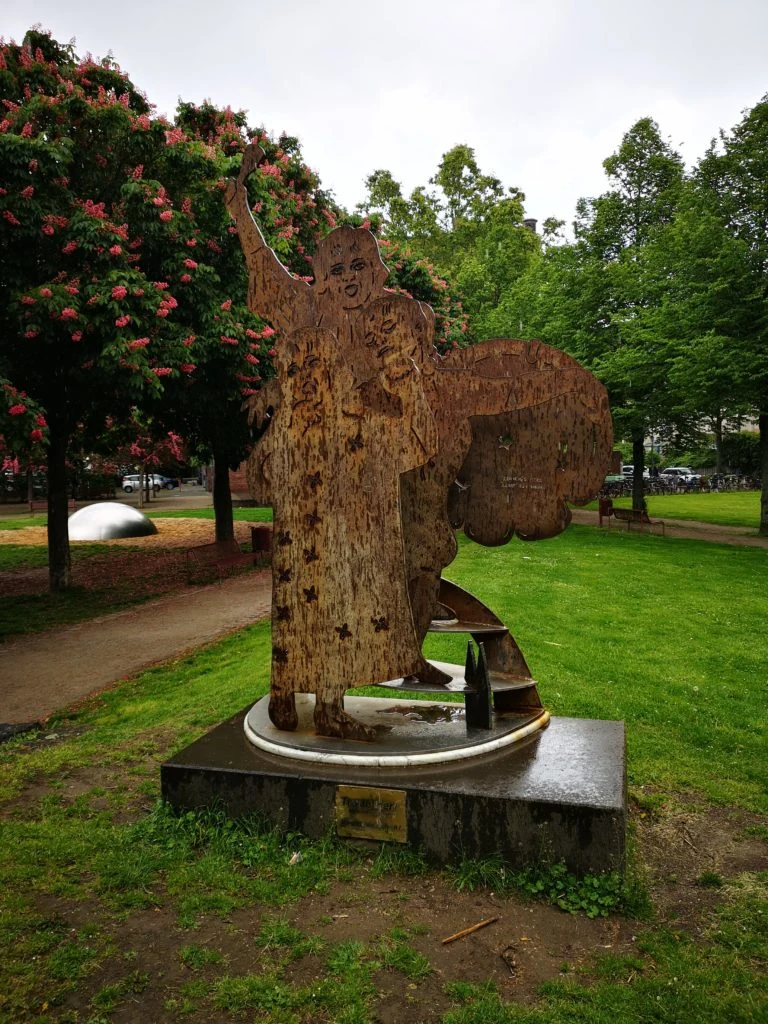
For the singer, the circle closes with her biggest hit about “chocolate” in front of the former largest chocolate factory in Cologne.
New time
In 1987, the 'Theater im Vringsveedel' was taken over by the then operators of the 'Broadway' and 'Off-Broadway' formerly 'Lupe(1)', Albrecht Winterberg and Heinz Holzapfel (among others), completely renovated and reopened in October as a cinema under his current name ODEON. In 1994, the cinema in Südstadt together with the Broadway on Ehrenstraße and the Off-Broadway on Zülpicherstraße is taken over by the 'Arthaus-Lichtspieltheater Betriebs-GmbH', a subsidiary of the 'Kinowelt-Medien-AG'. Due to the spectacular crisis of the Kinowelt parent company, the Arthaus subsidiary has to stop operating its film art cinemas throughout Germany in 2001. On 30 January 2001, the Odeon cinema in Cologne will be closed together with Broadway, although around 25,000 Cologneers had campaigned with their signatures for the preservation of the cinemas. After a closure of more than three months and a fundamental renovation, made possible by an immediate measure by the Filmstiftung NRW, the ODEON will be reopened on Wednesday, 6 March 2002 with a preview of the French Kömödie 'Tanguy' by the ODEON-Lichtspieltheater GmbH (Dieter Hertel, Jürgen Lütz, Christian Schmalz and Angela Wilde), which was founded to save the ODEON. The regular game starts on Thursday 7 March 2002 with the premiere of Wim Wender's BAP film 'Viel happens' in which, in addition to BAP and Wolfgang Niedecken, Cologne and the Cologne Südstadt also play an important role.
From day one, the new ODEON-Lichtspieltheater with its selected and varied film art program will be accepted by the people of Cologne. Acoustic construction measures in the hall and improvements in sound and projection technology guarantee performances that meet all modern requirements of cinema visits. The spacious cinema hall with its 374 seats impresses with its nostalgic film palace atmosphere and its 84 m2 large screen. In addition, the Café des ODEONS and the beer garden attract not only film visitors to the cinema of the Südstadt.
Sources:
https://www.kuladig.de/Objektansicht/KLD-290326 https://de.wikipedia.org/wiki/Trude_Herr http://www.rheinische-geschichte.lvr.de/Persoenlichkeiten/trude-herr/DE-2086/lido/57c82d8f42ab75.72668780 https://www.odeon-koeln.de/inhalt/wir_ueber_uns/geschichte