
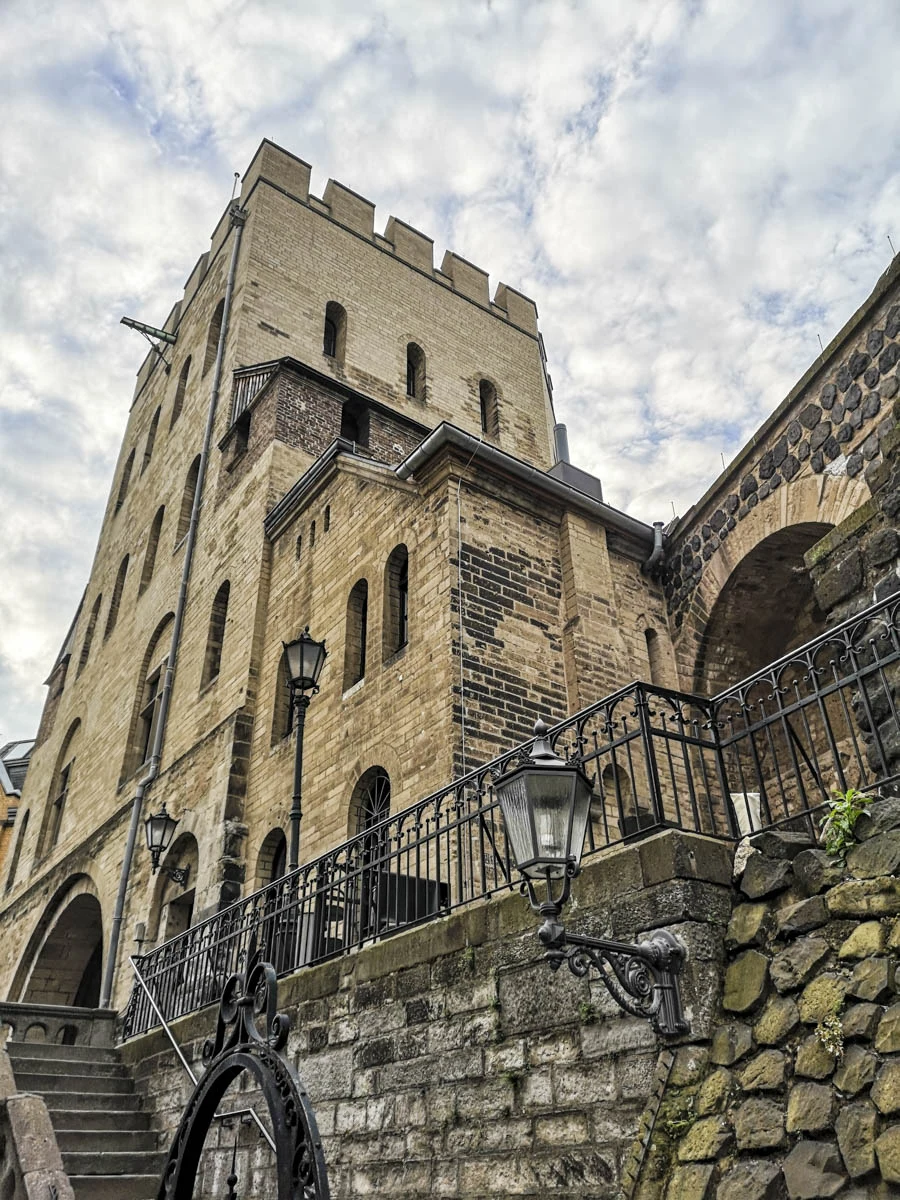
The Severinstorburg is named after the parish of St. Severin, in The Middle Ages It was also called “Porta (Sancti) Severini”. Kölsch It is called Vringspooz or simply Severinstor.
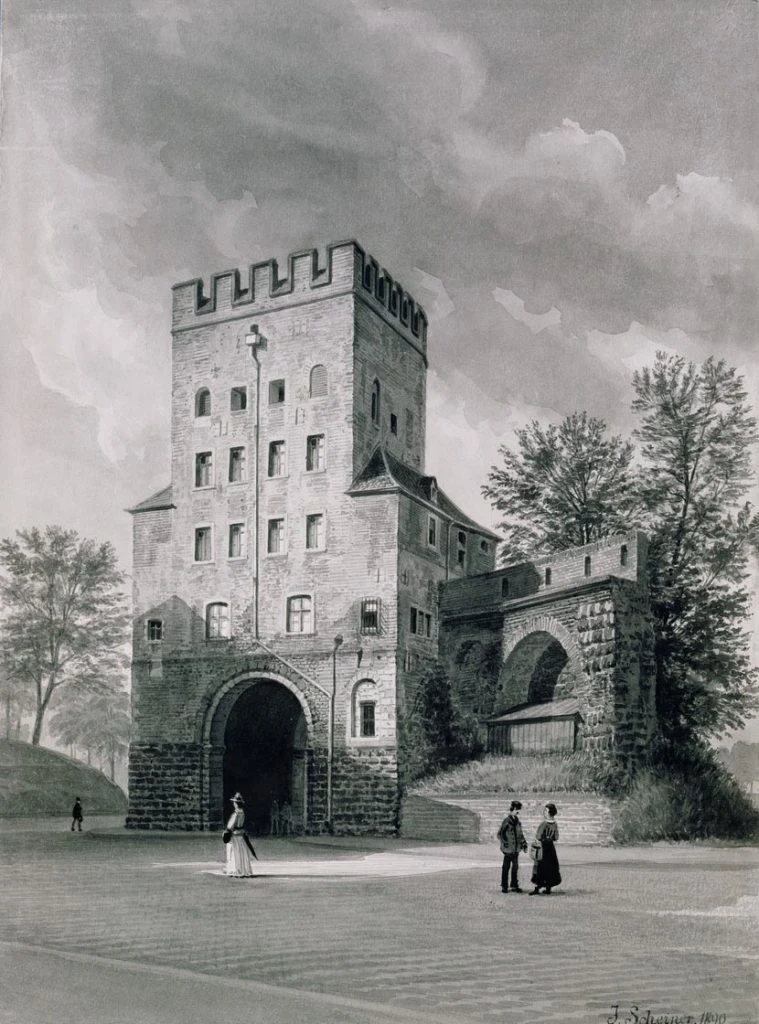
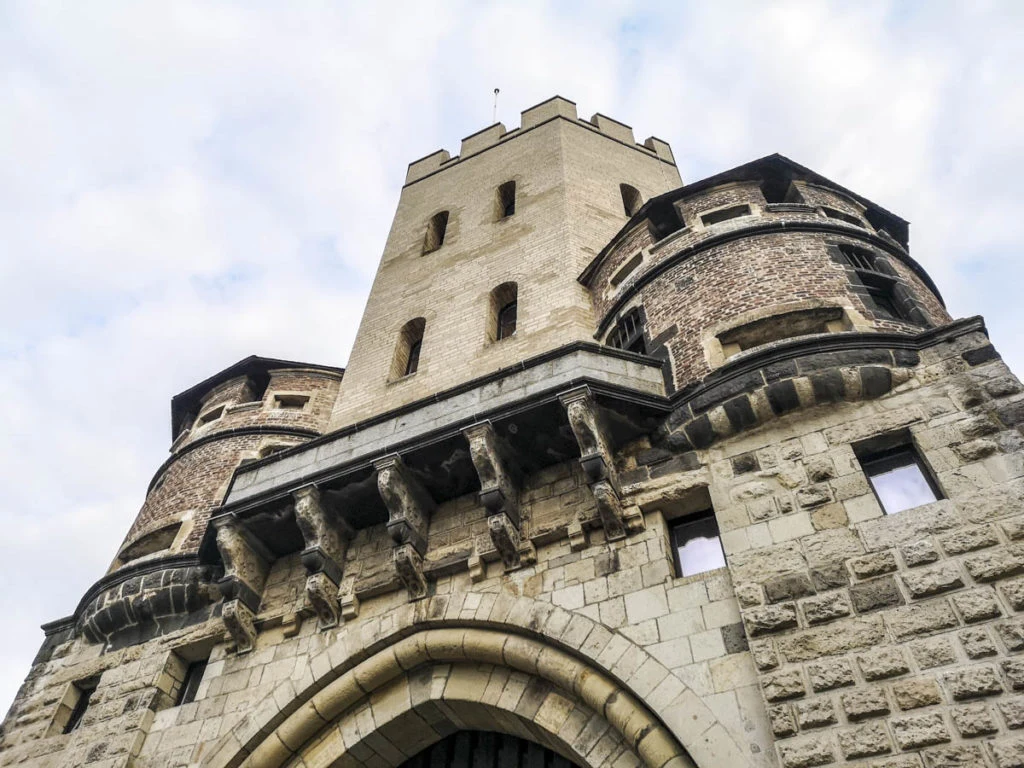
It is one of four remaining cities.Torburgen’ the Medieval city wall from Cologneand next to St Severin The symbol of the Severinsviertel in Cologne and an excellent example of medieval fortification architecture.
In the first half of the 13th century, the Severinstor was built from tuff stones.
During the Middle Ages, the Severinstorburg was one of the representative gates of Cologne. They received high-ranking people with riding tournaments and mine games.
Above the portal existed around the main tower as a combat platform, which was later removed. Finally, the gate secured an important road to the south of the Reich to Bonn. Thus, this was an important strategic position and also protected several monasteries.

After the demolition of the city wall, the gate housed a natural history museum, later a hygiene museum. The Hitler Youth also came to the Nazi period in the tower. In the 1970s, it was converted into a civic center.
Every year on Weiberfastnacht, the Rider Corps Jan von Werth plays the saga of Jan von Werth in front of the Severinstor. A sign at the Torburg reminds of this. It says that poor servant Jan fell in love with the maid Griet. However, Griet wanted to make a better match and rejected his marriage proposal. Jan is unhappily recruited for the army and goes to war. As a capable soldier, he becomes a general and later passes through the Severinstor with his troops. At a market stall, he discovered his former great love Griet and said to her: “Griet, who would have jedonn!” (Griet, who would have done it!) And she answered him, “Jan, who would have you?” (Jan, who knew!) He then gets back on his horse and rides away.
During work for the subway North-South, the foundation walls of the “bulwark” in front of the Torburg were found in 2005. This fortress was intended to protect against attacks by Burgundian troops in the 15th century, currently a state-of-the-art facility. Cologne, however, was not attacked and the plant in the 18th century. torn off. Plans are now to rebuild the excavated foundation walls nearby.
Today the Severinstorburg is the official wedding place of the city of Cologne. The premises – Bürger- and Severinsstube, as well as the Tower Hall – can be rented for private celebrations.
Sources:
https://de.wikipedia.org/wiki/Severinstorburg https://www.stadt-koeln.de/leben-in-koeln/familie-kinder/ehe-lebenspartnerschaft/die-severinstorburg