
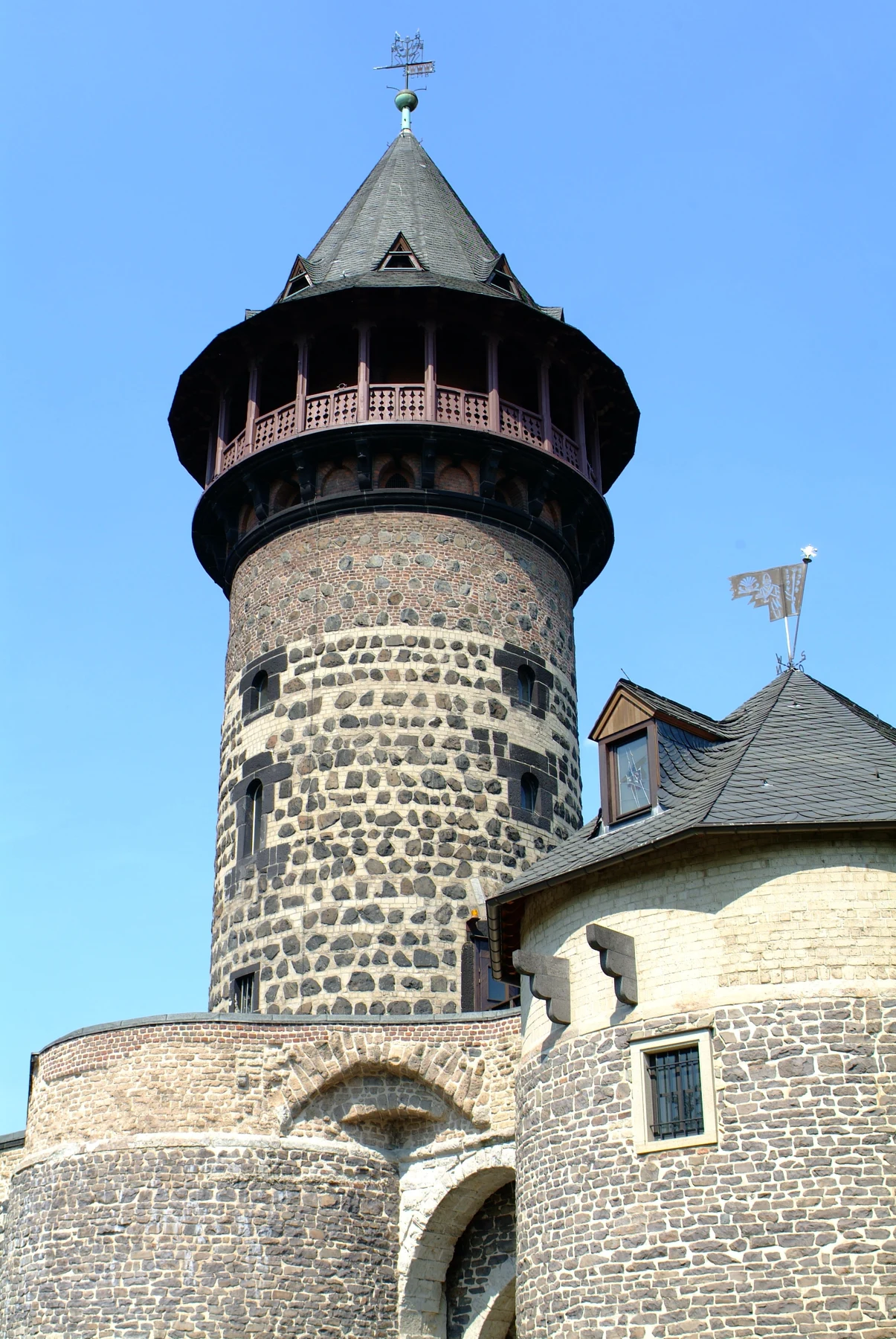
To protect the city of Cologne, Ulrepforte was built at the beginning of the 13th century as part of the city wall. Guards looked for the small double tower gate and regulated the traffic into the city.
Since the Ulrepforte is not on any of the important entrance streets, it only offered access to fields, the guards did not have much to do.
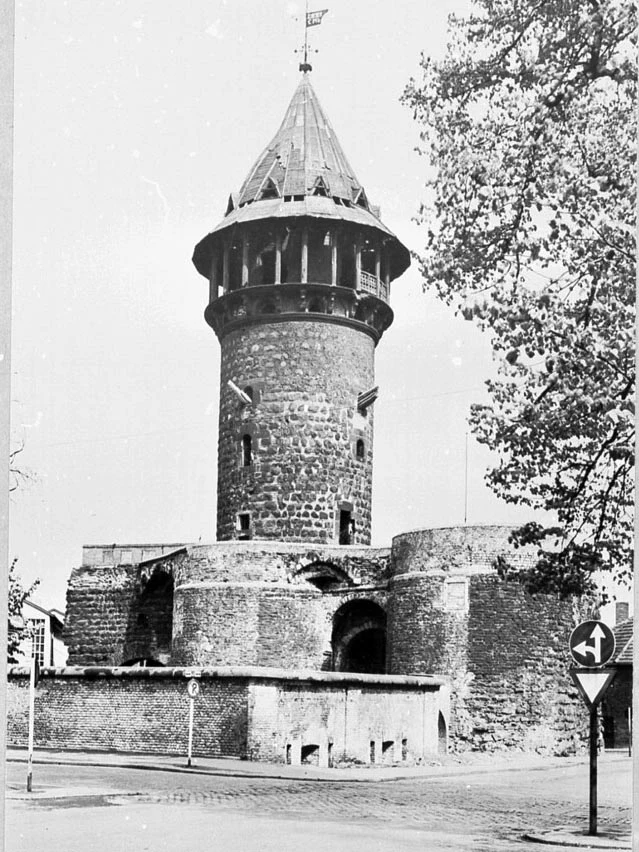
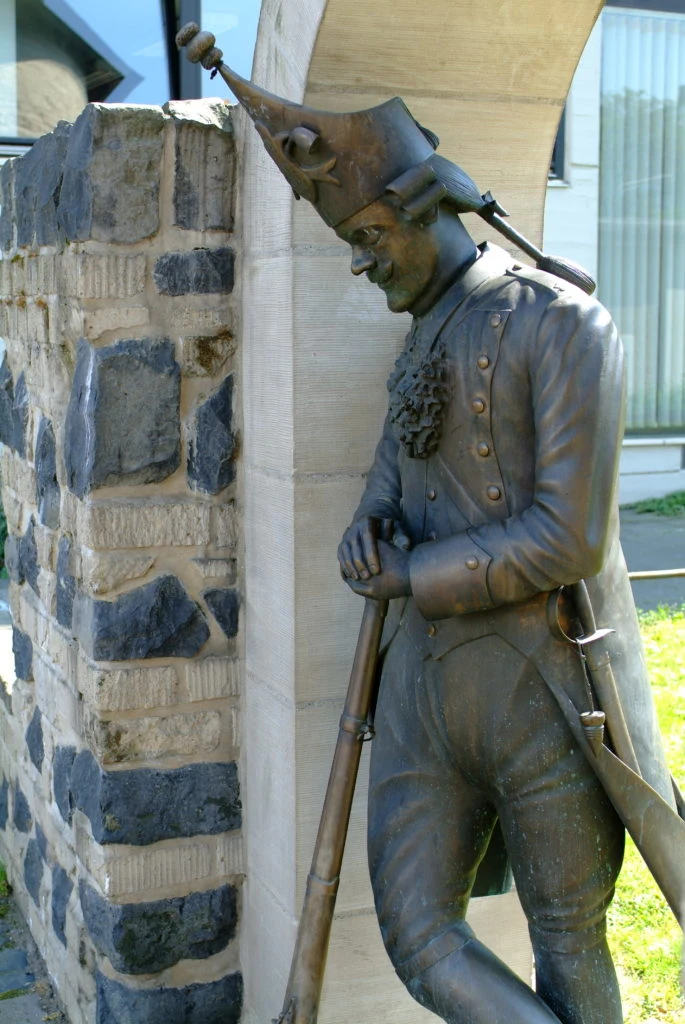
800 years later, this city gate still houses uniforms, it is the quarter of the carnival society "Kölsche Funke ru-wieß vun 1823 e.V." With their support and the help of a support association, the gate was renovated and renewed.
The name derives from the Middle High German word ulner or euler (potter). Because of the fire danger, they had to practice their craft in more uninhabited areas.
1268 Archbishop Engelbert II, expelled by the citizens, tried to enter the city with his followers. In a bloody battle at Ulrepforte, the independence of the city was defended. A relief monument still bears witness to this event today.
In the 15th century, use as a city gate was postponed and a mill for the nearby Carthusian monastery was set up.
When the city wall was demolished in the 19th century, the Ulrepforte was preserved as a monument. The mill was dismantled, a neo-Gothic tower hood set up and a restaurant in the front building set up.
During World War II, Ulrepforte was used as an air shelter.
1907 The Ulrepforte falls by a donation to the city of Cologne, which leases it as a restaurant.
1955 take over the "Kölsche Funke rut-wiess vun 1823 e.V.", who see themselves among other things as successors of the former Cologne city soldiers, the Ulrepforte in inherited lease. The entire complex is restored today with great financial and ideal effort and used for association purposes.
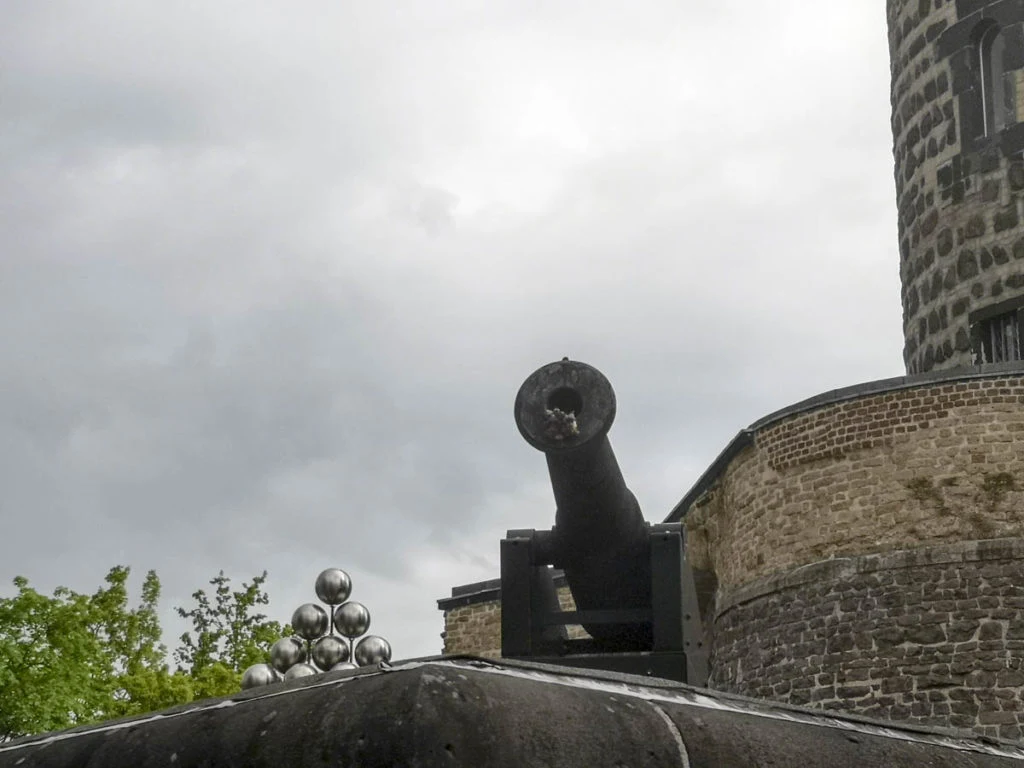
The Ulrepforte is actually only the old city gate. Today, in general usage, the entire complex, i.e. the gate, the mill tower and the Kaponniére, is called Ulrepforte.
The Ulretor is a so-called double tower gate, a multi-storey middle building with passage. Shells or tubes are attached to the field-side edges. In the southwest of the city, where confusing terrain extended - also in front of the Ulretor -, the middle structure of the city gates towered over the flank towers by an additional floor. The principle of double tower gates goes back to Roman origins. Nevertheless, according to Prof. Dr. Udo Mainzer, the gates of Cologne are a self-creative achievement, which reflects the flowering of Cologne architecture.In his opinion, the late Staufian reinforcement of the city of Cologne was the beginning of the now occurring wave of city fortifications in the Rhineland.
Sources:
https://www.nrw-stiftung.de/projekte/projekt.php?pid=359 https://de.wikipedia.org/wiki/Ulrepforte https://www.rote-funken.de/index.php/rote-funken/geschichte/die-ulrepforte