The second oldest Cologne cinema "Thalia" began in 1908 with 250 seats in the Severinstraße no. 152, the next cinema on the street were the "Severin-Lichtspiele" with 500 seats (no. 95) in 1911.
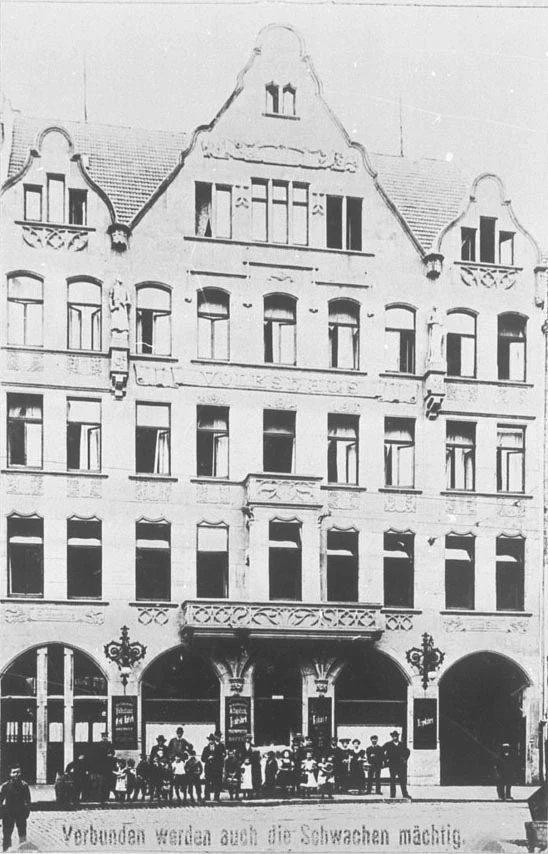
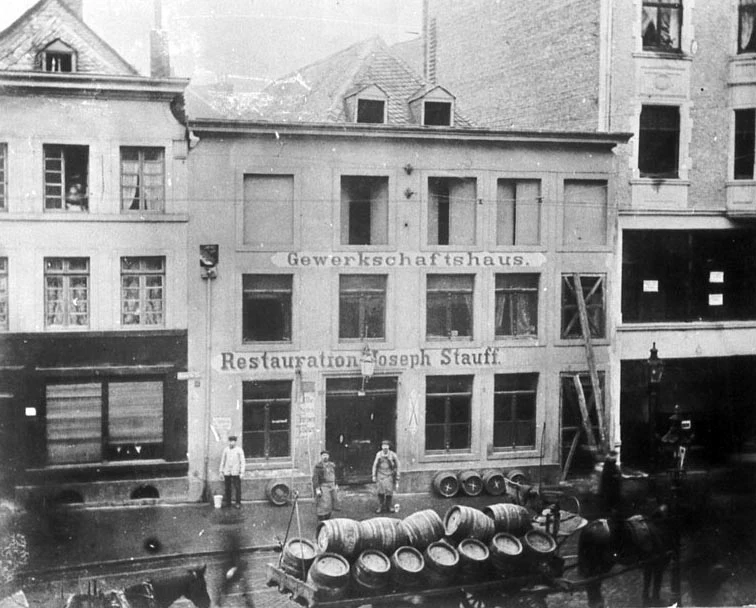
After the dismantling of the Stauff Brewery in March 1905, the "Deutsche Volkshaus" opened on 15 August 1906 in its place in No. 197-199 as the political center of the Socialistsand Communists. Here, besides the General German Trade Union Confederation also the SPD and the workers' bank their seat. On the occasion of Reichstag elections On the evening of January 12, 1912, 4,000 spectators gathered in front of the Volkshaus.
In 1910, in order to develop the newly built monastery area, the city created the street Im Dau, which opened the two straight-guided and busy streets Ulrichgasse (part of today's streets). North-South journey) and connects Severinstraße.
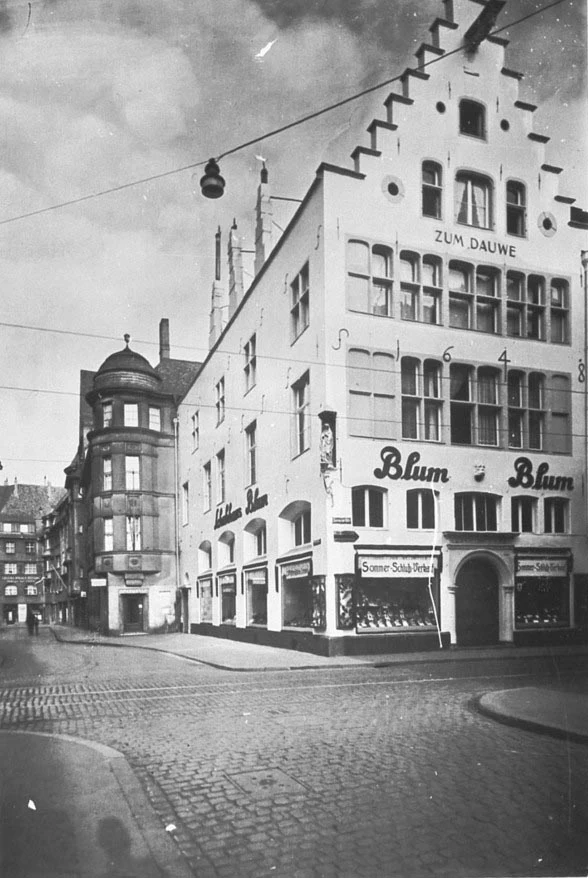
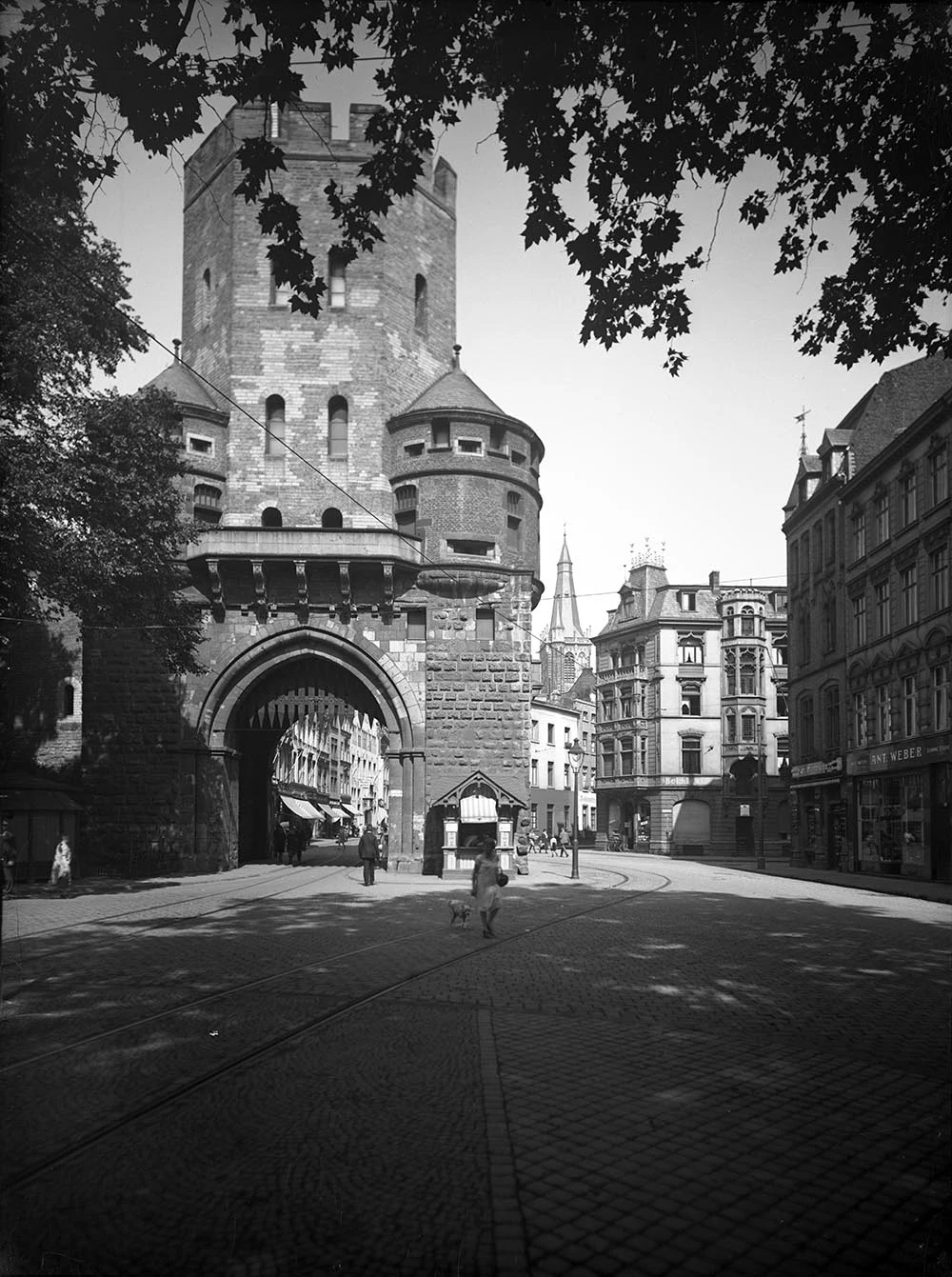
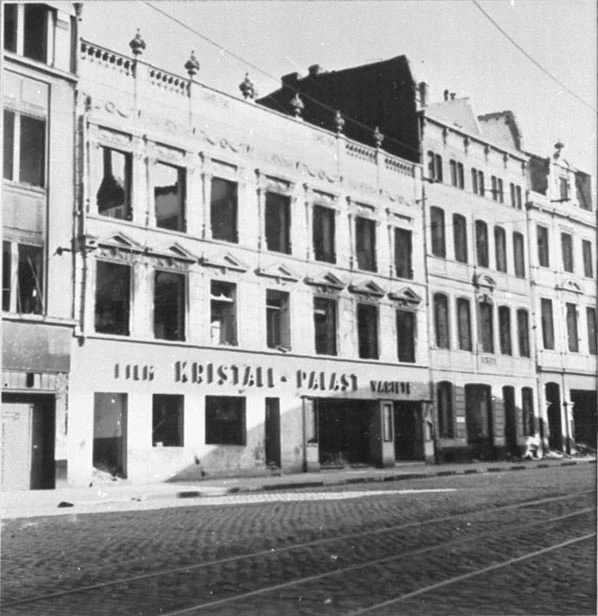
Reproduction No: rba_mf090765
Photo credit: Rheinisches Bildarchiv Köln, circa 1938
Cologne,Image credit: © Rheinisches Bildarchiv Köln, rba_mf090765 · Image source · Image credit
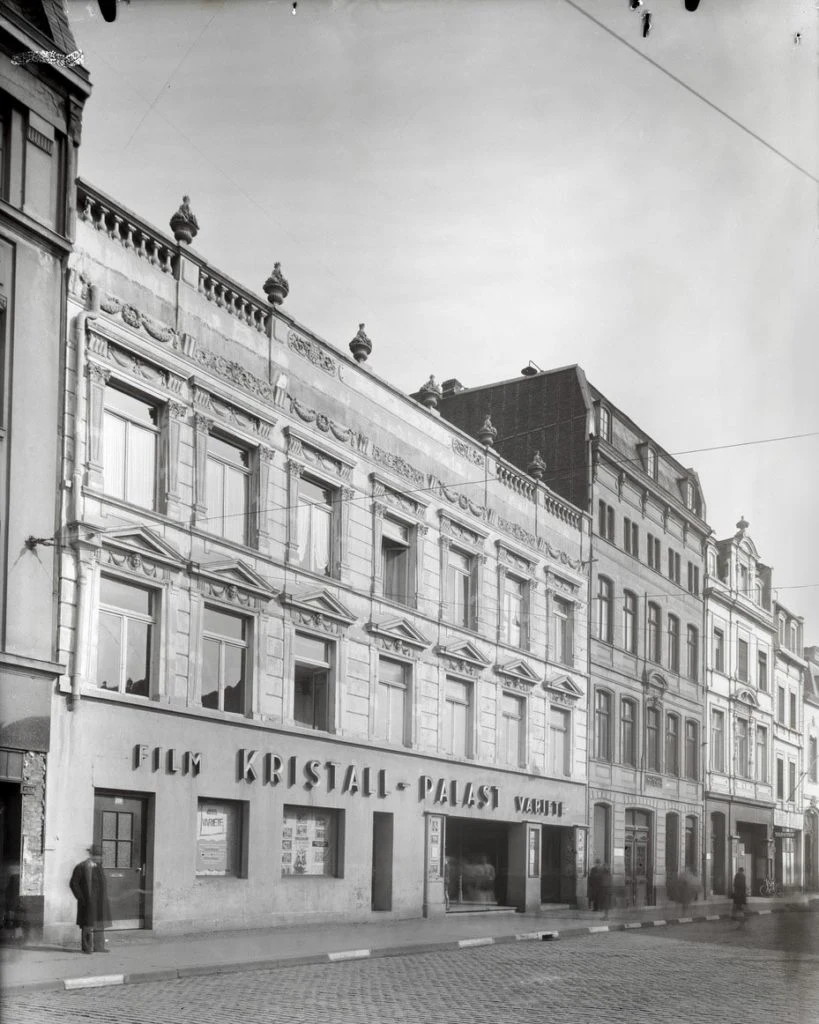
To build the street, it acquired the grounds of the monastery church dedicated to Our Lady and Saints Joseph and Teresa. In 1914, sculptor Simon Kirschbaum created the Hanseatic fountainwhich is still today “Im Dau”. The former Victoria Theatre in No. 222–228 offered stage performances from December 1875, since 1925 there were more and more film screenings. Therefore, in 1928 it changed its name to “Monopol Theater” with a capacity of 853 seats and opened again on 19 October 1928. Here the Jewish operator Paul Jockel set up the largest cinema concert organ in Europe in February 1929. Jockel saw himself in 1934 because of the Aryanisation Forced to sell the property to Julius Tiedje, who at the opening on 10 August 1935 introduced the name “Crystal Palace” (destruction by bombs in 1943). Under the name "Charlottenhaus" was built in 1913 in no. 158 a day welfare center for children of distressed parents, named after the sister of Emperor Wilhelm II., Princess Charlotte of Sachsen-Meiningenwhich was present at the inauguration on 25 April 1913. The Welfare Center belonged to the foundation of the widow of the Emil Oelbermann.

The majority of the people of Cologne voted in 1919 for the German Center Party (40.8%). In the 1920s, the spelling Cologne is reintroduced (not Cöln, as imposed from 1900), the Cologne University is reopened, the Müngersdorfer Stadium is completed. The Cologne fair opens, the Hansahochhaus is the largest skyscraper in Europe. The Petersglocke in Cologne Cathedral is the largest free-swinging ringable bell in the world. The Tietz department store (now the Kaufhof building on Schildergasse) is also highly modern with the first escalator in Germany.

The occupation ended in 1926 with the withdrawal of British troops.
The South City under National Socialism
In the 1930s, a growing political radicalization also took place in Cologne. Increasingly unrestrained clashes between National Socialists and Communists claim numerous deaths.
The writer Irmgard Keun is also affected by this political mood. After an acting education in the Weimar Republic, she became one of the few successful writers at the beginning of the thirties, and even wrote a world success with the novel “Das kunstssildene Mädchen”.
After 1933, her works are confiscated and banned and public burned. Irmgard Keun was born in Berlin, grew up in Cologne, returned to Cologne after an exile in the Netherlands and spent her retirement in Cologne’s Südstadt.
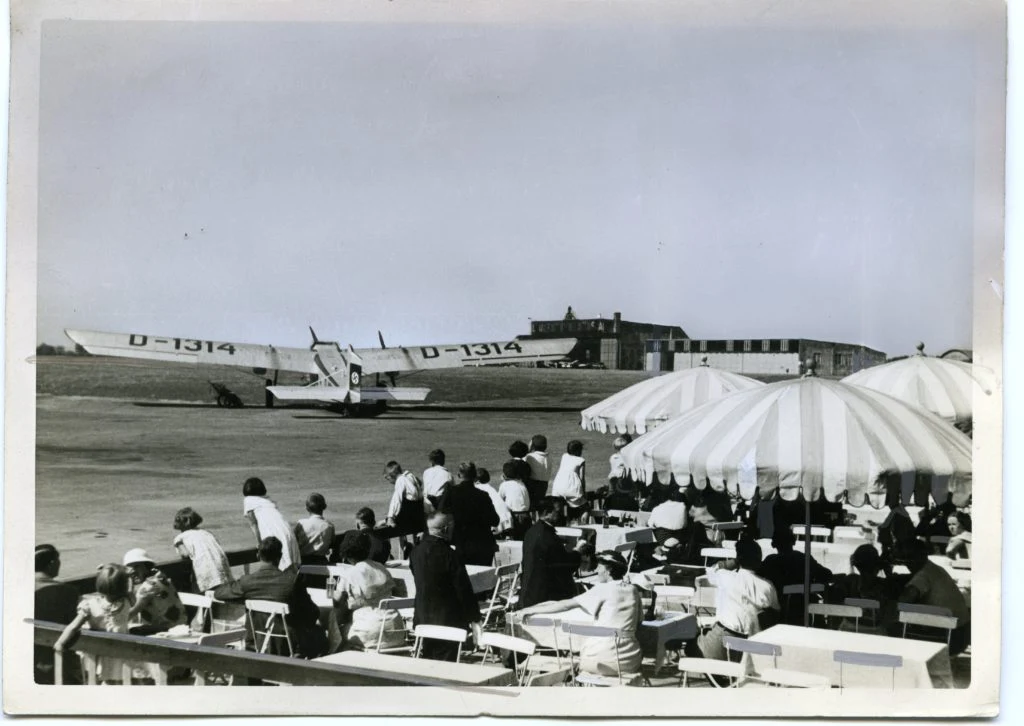
Despite the influence, the NSDAP in Cologne with 33.1 percent of the vote was below the Reich average of 43.9 percent. The cathedral city is, as it happens everywhere in Germany, “synchronized”. Politicians (such as Konrad Adenauer) are forced out of their offices, press organs ("Kölnische Zeitung") are converted into a propaganda instrument. Cologne as a whole enters into the national power structure. Hermann Göring already received the honorary citizenship of Cologne in 1934, later also Hitler, Goebels and other party functionaries. Many Cologne clubs and clubs exclude Jews as members even before it becomes mandatory, many citizens enrich themselves in the political mood against Jews.
78.7% of the citizens of Cologne agree, as Hitler’s position of power is strengthened by the merger of offices (Reichspräsident and Reichskanzler).
Only individuals and few groups actively resist.
These events are to be emphasized and significant for the Cologne Südstadt:
On March 3, 1933, an SA squad marched through the Alsace Street, considered a communist stronghold, in Cologne’s Südstadt. Residents of the street throw flowers and night pots under insults at the marching combat organization. Shots are fired, SS and SA men search apartments, arrest 70 people and put the inhabitants of the street under house arrest for three days.
On May 2, 1933, 80 SA-People from their headquarters on Mozartstraße, occupied the Volkshaus and confiscated the inventory.[44] During the NS time It functioned as a “race biological” examination and selection site, from where the central deportation of Gypsies took place.[45]
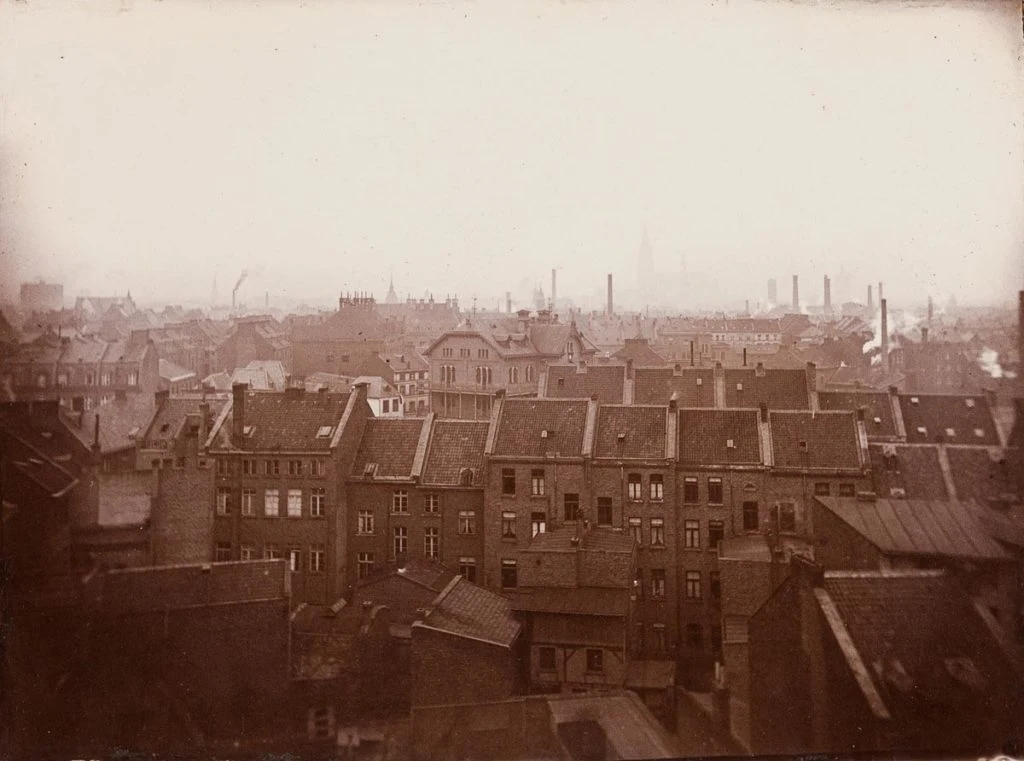
The tenant of Severinstorburg Jean Jülich, who died in 2011, was a member of the so-called “Ehrenfelder Gruppe” during the Nazi period. This was part of the White pirates, a youthful protest movement that resisted, among others, in Cologne. The group was also known for short concise messages on leaflets ("Brown as shit, so brown is Cologne. Wake up!"). Later on, he continued to work for the social interests of his district, the Südstadt.
Sources:
Carl Dietmar, Werner Jung: Cologne. The great city history, Klartext Verlag, Essen 2015
https://de.wikipedia.org/wiki/K%C3%B6ln https://de.wikipedia.org/wiki/Geschichte_der_Stadt_K%C3%B6ln https://www.koeln.de/ausstellungen/geplante_ausstellungen/koeln-in-unheiligen-zeiten-die-stadt-im-dreissigjaehrigen-krieg_844635.html https://de.wikipedia.org/wiki/Franzosenzeit https://www.ksta.de/koeln/koeln-im-18--jahrhundert-kluengel--suff-und-gottesfurcht-3965100 https://koeln-magazin.info/nationalsozialismus.html https://de.wikipedia.org/wiki/Severinstra%C3%9Fe_(K%C3%B6ln https://de.wikipedia.org/wiki/Jean_J%C3%BClich